At Penn Center on St. Helena Island, a fundraising fish fry turns a plate into protection—raising money to defend Gullah land while celebrating the culture that made it. Local partners work the line like a liturgy—Gullah Project, Marshview Community Organic Farm, Gullah Grub—reminding us that cornmeal and hot oil can be civic infrastructure. This is Lowcountry mutual aid in its native tongue: feed the people, fund the future, keep the heritage.
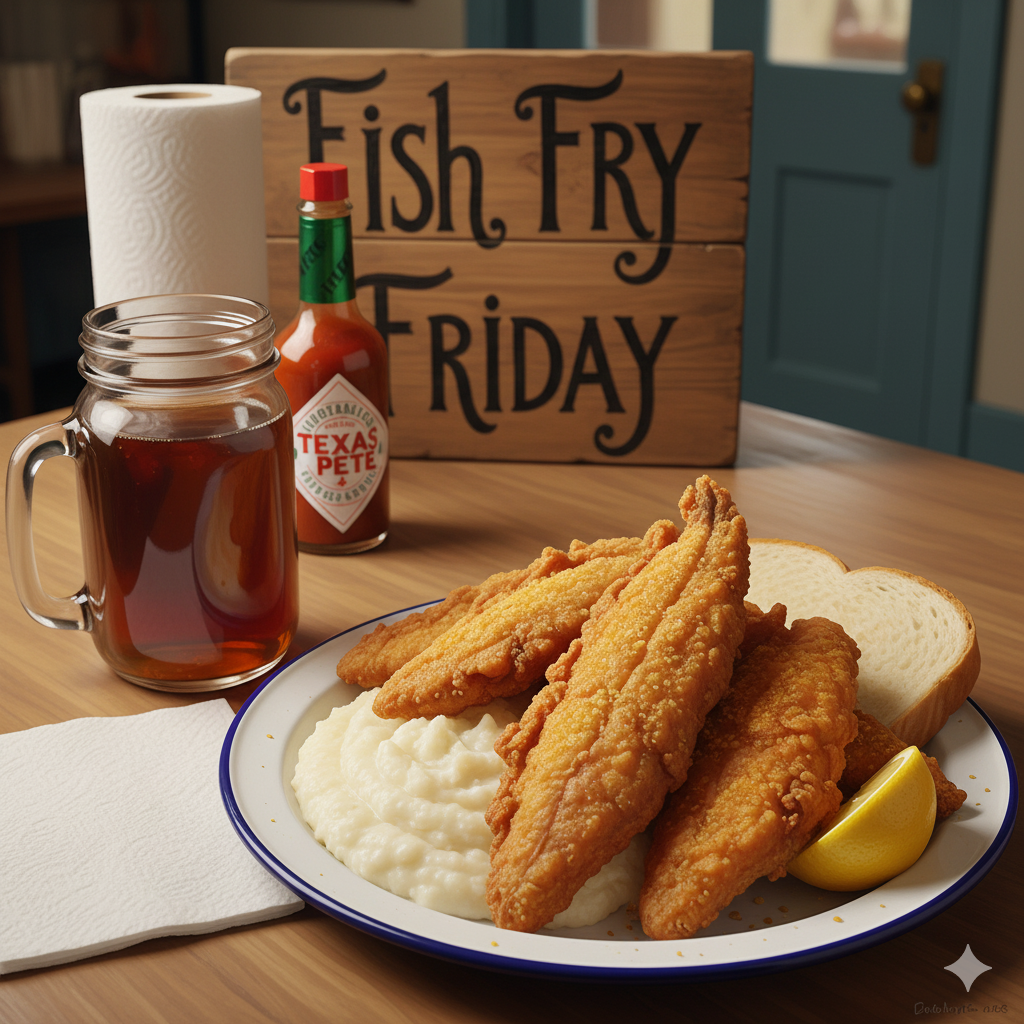
Where I'm from, a fish fry isn't an event so much as a covenant. We work all week in a world that doesn't always love us back, then gather around a pot of hot oil to remember who we are. In the church kitchen or on the gravel beside the fellowship hall, somebody's auntie is dusting whiting in cornmeal, and somebody's deacon is laying out white bread, hot sauce, and paper towels like liturgy. When I say "fish and grits," I mean whiting—thin, sweet, fried crisp in a cornmeal crust—set next to creamy, buttered grits that hold the heat while the stories stretch long. These fries raise money for building funds and youth trips, but they also raise spirits, stitch neighborhoods, and teach our children the choreography of belonging: speak, serve, sit, pass, laugh, clean, and carry someone else's load home in foil. This is not food tourism. It's communal practice—sacred, ordinary, repeating—as sure as Friday comes each week. In "Fish Fries and Fellowship" you'll find proof: elders stewarding memory, kitchens financing freedom, recipes that taste like a porch at dusk, and histories that explain why a plate of fish can feel like a hymn. Come on in; the grease is ready.
Soapstone's monthly fish fry kept an historic Black church alive for 22 years—then sent it forward with a schoolhouse restored and a monument raised. You can feel the theology of "loaves and fishes" in the line out the door and the joy on Miss Mable's face. Fundraising here is fellowship made visible.
Meet the deacon who turned a promise to her mother into a decades-long practice of feeding people to save a sanctuary. This profile anchors Soapstone's story in land, legacy, and a long resistance that includes rebuilding after Klan arson. The fish fry is her instrument of stewardship.
Photographs and notes place Soapstone in its full arc—from brush arbor to rebuilt sanctuary—so you can see the ground these plates have protected. Hold the images next to your own memories of folding tables and tartar sauce and notice how place turns a meal into a monument.
Nafeesah Allen writes the diaspora onto a single plate—whiting sandwiches, hushpuppies, escovitch—tracing how fried fish funds, gathers, and travels. Read this when you want language that honors the labor behind the crunch and names why Fridays feel like home.
From Denver church basements to Chicago carryouts, Adrian Miller explains the Midwestern pairing that confuses outsiders and comforts us. It's fundraiser food and migration memory—catfish or whiting meeting spaghetti in a plate that tastes like a choir rehearsal ran late.
If you're frying for the fellowship hall, this is the baseline: whiting, seasoned, dredged in cornmeal, and kissed by 350°F oil for 3–4 minutes a side. The method is simple, but the ministry is timing—so folks eat while the crust still sings.
Not a church fry—but kinfolk to it—this SFA story follows Carolina fish camps as weekly rites of gathering. Hear how working families built community around platters of fried flounder and catfish, mirroring what we do in fellowship halls across the South.
Know something that belongs here?
If you've found a video, essay, recipe, or oral history that honors fish fries and fellowship, send it my way.
Suggest an addition