A praise-house singer remembers the elders who formed her and then demonstrates the songs—moving from quiet devotion to full shout. It's pedagogy by breath and body, the Sea Islands' way of teaching.
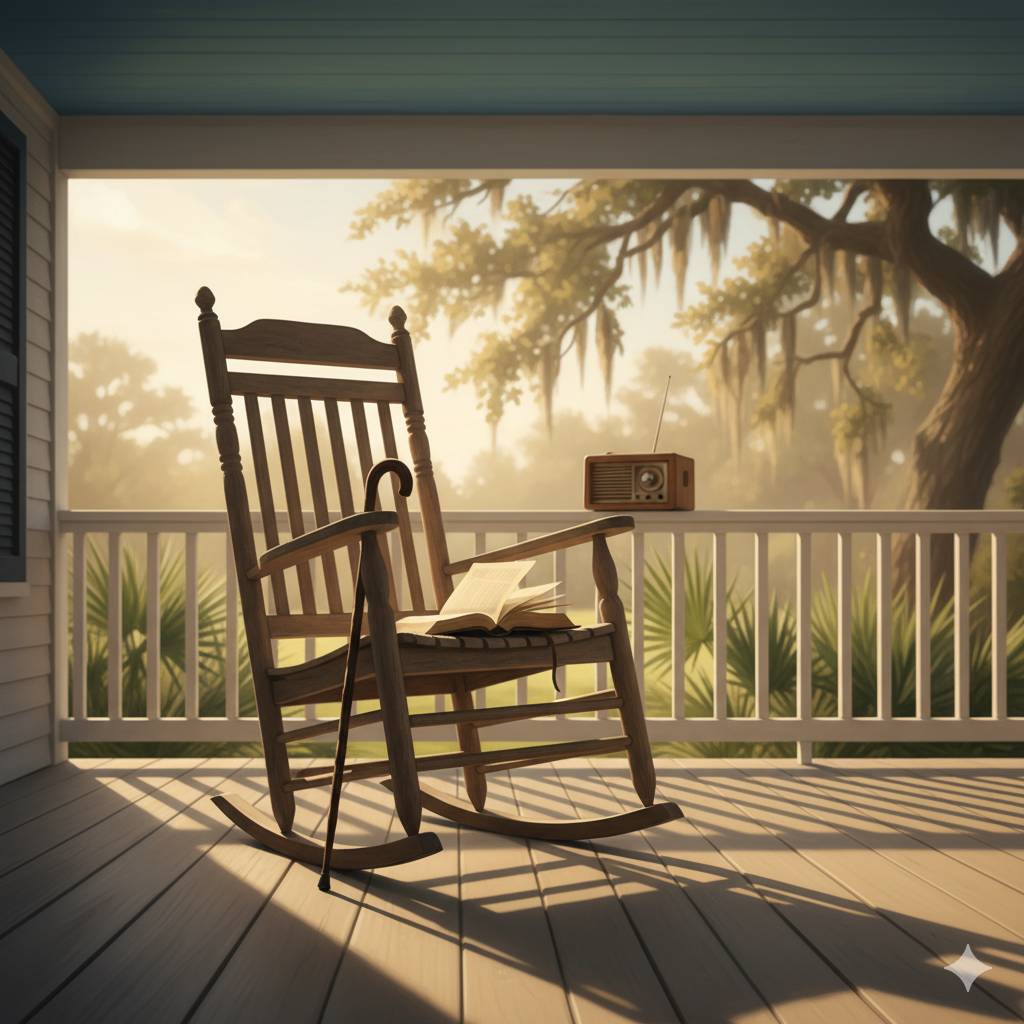
The elders speak in a rhythm the microphones barely catch: porch pace, praise-house tempo, the long vowel of a Sea Island evening. When I say "Voices from the Porch," I'm talking about the people who kept the watch night, lined the hymn, cooked the repast, crossed the bridge and came back so the children would still know the tune. These oral histories are not museum dioramas; they're living testimonies—Deacon Smalls explaining how a praise meeting moves, Miss Gadson raising "Adam in de Garden," Aunt Pearlie Sue pulling a memory till it shines. I want you to hear the grain of the voices and the room around them—the truck idling, the choir changing keys, the scrape of a folding chair—because that's the classroom. This collection gathers recordings from St. Helena Island and Charleston kitchens and sanctuaries, where elders tell exactly how it was done and why it still matters. Pull up a seat on the porch, and let the cadence do its work.
Recorded on the back of his truck with cows lowing, Deacon Smalls explains hymn-lining, sets the order of service, and sings parts so you can hear the harmony in your bones. This is a field manual for leading people in song.
Mrs. Murray traces church life then and now and sings through a set list that could be any fifth Sunday on the island. It's the sound of continuity—faith, discipline, and a repertoire carried person to person.
The Gullah Kinfolk founder folds theater and testimony together, singing through the tradition and naming the institutions—Penn School, brick churches—that steadied her steps. Art, education, and ministry braided into one.
Elder song-leaders trade lines at Bethesda—"raise a song," pass the lead, bless the people. If you've never watched a praise session move the room, start here.
On the eve of Heritage Days, the island gathers and the repertoire unfurls—"Walk with Me," "Somebody's Calling My Name," testimonies between. This is fellowship as archive.
Chef Charlotte Jenkins sets Lowcountry cooking in the voices of Awendaw and Wadmalaw, connecting restaurant work to the home knowledge that raised her. Read it to hear how women kept culture on the stove and in the story.
P.A. Bennett's program lets interpreters and culture bearers speak plainly about Gullah life—from brickmaking to books to children's TV. It's a clean on-ramp for visitors who need to hear the context from home folks.
Know something that belongs here?
If you've found oral histories, interviews, or recordings that should be preserved and shared, send them my way.
Suggest an addition