Shoshi Parks walks Daufuskie and the Sea Islands with people who hold this color close—naming haints, blue doors, and the double story of beauty and suffering tied to indigo. It's a humane primer on why this shade is a talisman, not a trend.
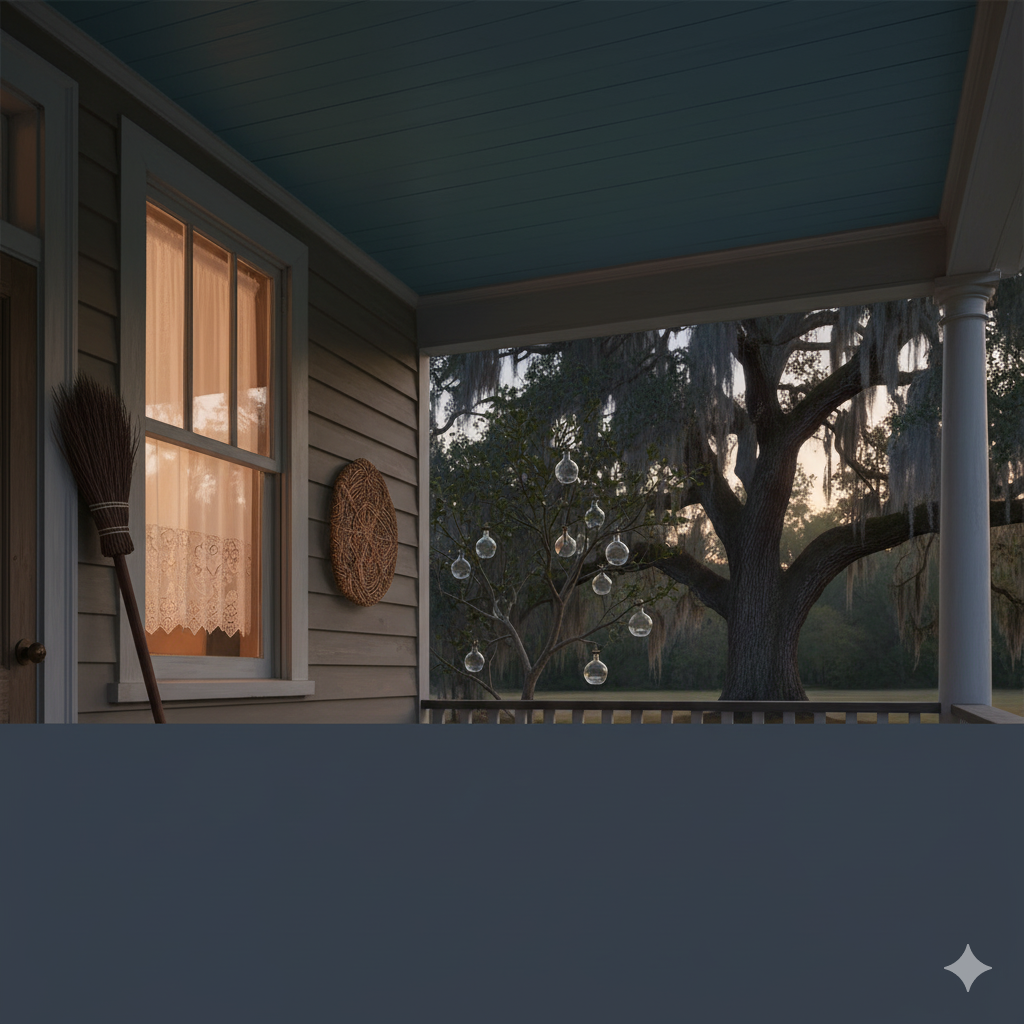
Haint blue isn't just a pretty porch color; it's an act of care. In the Lowcountry, our elders brushed that sky-water blue across piazza ceilings and over doors to tell the world—seen and unseen—that this house is tended. You'll find it from Beaufort to Daufuskie to Savannah, tied to an older grammar of protection: bottle trees humming in a salt breeze, thresholds dusted and swept with intention, sweetgrass curled like a whispered prayer. The color carries memory too—indigo knowledge carried here by West African hands, blue that once meant back-breaking labor and also meant beauty you could bind to wood. These practices aren't quaint superstitions; they're technologies of belonging, made by people who learned to keep families whole under pressure. In "Haint Blue and Protective Practices," I'm gathering sources that speak from the region and with respect—histories with receipts, museum notes you can visit in person, elders explaining why their porches look the way they do. Come see how the Lowcountry keeps house, body, and spirit in one piece.
Step into Savannah's preserved slave quarters and look up—haint-blue boards still guarding the sleeping space. This site anchors the practice in a room you can stand inside, connecting paint to people and their strategies of protection.
Indigo is the plant history behind the paint—West African expertise meeting Carolina soil. Reading this piece reveals how a dye that once built fortunes at terrible cost still threads the region's color story.
Luana M. Graves Sellars writes from within the community about why porch ceilings and front ways wear blue in the Lowcountry, and what that signals about care, safety, and continuity.
Those cobalt bottles that catch the light aren't decoration alone—they're working objects meant to trap trouble before it crosses your threshold. This explainer ties the practice to Sea Island life and African continuities.
A regional primer that lays out how bottle trees are built, why blue matters, and where you'll see them from Bluffton through Beaufort. File under: "so visitors stop asking your auntie if it's yard art."
The bottle tree goes public art—fifteen feet of blue-necked guardians rising in Bluffton as a testament to living tradition. The scale says what we've known: protection can be communal, beautiful, and boldly present-tense.
Context is care. The corridor defines the geography—North Carolina through Florida—and frames practices like haint blue and bottle trees inside a federally recognized cultural landscape.
Know something that belongs here?
If you've found sources about haint blue, bottle trees, or protective practices, send them my way.
Suggest an addition